
Have you ever felt frustrated when your internet slows down just when you need it the most? Maybe you are trying to attend an online class, join a video call for work, or just watch your favorite movie. We all want the internet to be fast, reliable, and available everywhere.
The government knows this too. That is why they have created something called the National Fiber Policy 2026. This is a big plan to change how we use the internet in India.
In this blog post, I will explain this policy in very simple words. We will look at what it is, why we need it, what it wants to do, and how it will help us in our daily lives. By the end, you will understand why this policy is so important for our country’s future.
What is the National Fiber Policy 2026?
Let’s break the name down.
- National: This means it is for the whole country, from big cities to small villages.
- Fiber: This refers to optical fiber cables. Think of these as special wires made of glass that carry internet data using light. They are much faster and more reliable than old copper wires.
- Policy: This is a plan or a set of rules.
So, the National Fiber Policy 2026 is the government’s big plan to spread fiber optic internet cables across the entire country. The goal is simple: to make sure every home, every office, every school, and every village has access to high-speed internet.
You can think of it like the old days when the government worked to bring electricity to every village. Now, the government is working to bring high-speed internet to every village. It is the next big step in connecting India.
Why Do We Need This Policy?
You might ask, “We already have the internet on our phones. Why do we need fiber?”
That is a fair question. Mobile internet is great, but it has limits. Here are the main reasons why we need a dedicated fiber policy:
1. Mobile Internet is Not Enough
Mobile data (like 4G and 5G) uses radio waves. These waves can be affected by weather, buildings, and a large number of users. When too many people use the same mobile tower, the speed goes down. Fiber optic cables are physical wires. They provide a stable and consistent connection that does not get slow during peak hours.
2. The Need for Speed
The world is moving towards new technologies like Artificial Intelligence (AI), Virtual Reality (VR), and 8K video streaming. These technologies need very high speeds and very low “latency” (which means no delay). Only fiber optic cables can provide this level of performance.
3. The Digital Divide
There is a big gap between cities and villages when it comes to internet quality. People in cities often have fast broadband at home. But in many villages, the internet is slow and unreliable. This policy aims to close that gap. It wants to make sure a student in a remote village has the same internet speed as a student in Mumbai.
4. A Stronger Economy
In today’s world, the internet is like a highway for business. If the highway is narrow and full of potholes, business cannot grow. Fast internet helps small businesses sell online, helps farmers get better prices for their crops, and helps create new jobs in IT and services.
The Main Goals of the Policy
The National Fiber Policy 2026 has clear and simple goals. Let’s look at them:
Goal 1: Fiber to Every Home
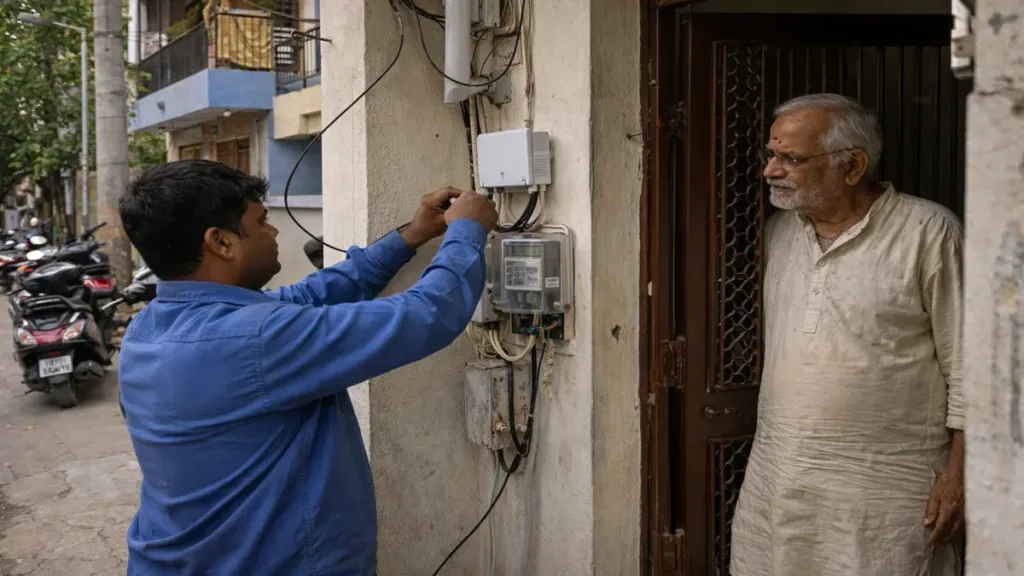
The main goal is to connect every home in India with a fiber optic cable. This is often called “FTTH” (Fiber to the Home). Imagine having a dedicated, super-fast internet line in your house, just like you have a water pipe or an electricity wire.
Goal 2: One Nation, One Network
Right now, there are many different internet companies, and their networks are separate. This policy wants to create a single, strong network infrastructure. This will reduce confusion, avoid digging up roads multiple times, and make it cheaper for companies to provide services.
Goal 3: Making It Affordable
A good policy is not just about laying cables. It is also about making sure people can afford to use them. The government will work to keep the prices low. This will encourage more people to switch from slow mobile internet to fast fiber broadband.
Goal 4: Preparing for the Future
We don’t know what technology will look like in 10 years. But we know it will need a lot of data. This policy is about building a “future-proof” network. Once the fiber is laid, it can support faster speeds in the future without needing to dig up the ground again.
How Will It Be Done?
A big plan like this needs a clear path to work. Here is how the government plans to make it happen:
1. Using Existing Infrastructure
Instead of digging new trenches everywhere, the policy encourages using existing infrastructure. This includes:
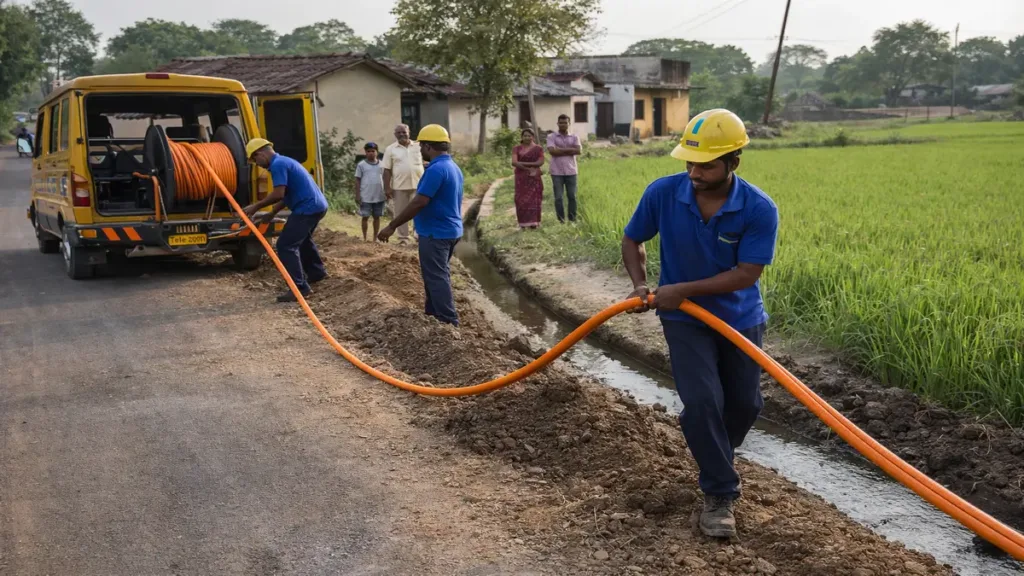
- Railway tracks: India has a huge railway network. Fiber cables can be laid along the railway tracks.
- Highways: New roads often have ducts (pipes) for cables.
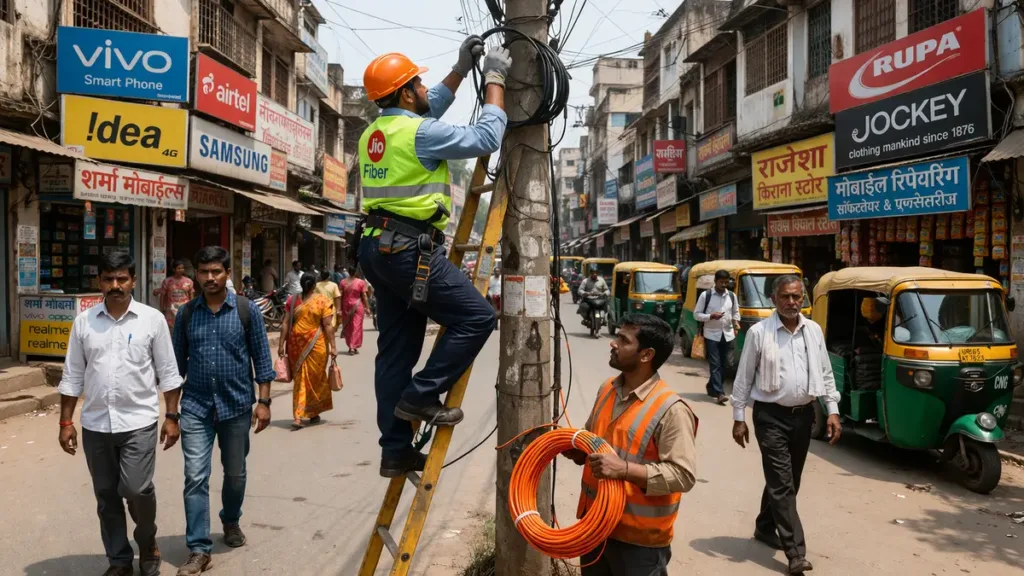
- Electricity poles: Cables can be hung on the poles that already carry electricity.
This method is faster, cheaper, and causes less disruption to the public.
2. Public-Private Partnership
The government will not do this alone. They will work with private companies like Jio, Airtel, and others. The government will focus on laying the main “highway” of fiber in rural and remote areas where it is not profitable for private companies. Private companies will then connect homes in cities and towns. This teamwork will help cover the whole country.
3. Simplifying Rules
One big problem in the past was getting permission. To lay a cable, a company needed permission from many different offices. This took months or even years. The new policy creates a single-window system. This means a company can get all the necessary permissions in one place, quickly and easily.
4. Creating a Fiber Agency
The policy also talks about creating a special group or agency that will manage the public fiber infrastructure. This agency will make sure that all companies have fair access to the network. This prevents any one company from having too much control and ensures healthy competition, which is good for consumers.
Benefits for Different People
The National Fiber Policy 2026 is not just for tech-savvy people. It will help everyone. Let’s see how:
For Students:
Imagine a student in a village being able to attend a live class taught by the best teacher in Delhi without any buffering. They can download study materials in seconds, take online exams without worry, and learn new skills from the internet. This policy will make digital education truly equal for everyone.
For Small Business Owners:
A small shopkeeper can start selling products online. A tailor can take orders from customers in other cities. A farmer can check the latest market prices and sell their produce for a better price. Fast internet turns a local business into a global business.
For Families:
A family can enjoy entertainment in 4K quality on multiple devices at the same time. A parent can work from home without any internet issues. Video calls with relatives living far away will be clear and smooth. It will change how families connect and enjoy their time.
For Government Services:
Many government services are already online. But slow internet makes them frustrating to use. With fast fiber, services like getting a certificate, paying bills, or accessing health records will be instant and easy. It will bring the government closer to the people.
For Job Creation:
This policy will create many jobs. It will need engineers to design the network, technicians to install cables, and customer service people to help users. Beyond that, a fast internet network will allow new businesses to start, creating even more jobs in the long run.
Challenges to Overcome
While the policy is excellent, it is not without challenges. The biggest challenge is the cost. Laying fiber across a vast country like India requires a huge amount of money. The government and companies will need to invest heavily.
Another challenge is maintenance. Once the cables are laid, they need to be protected from damage, especially during road work or construction. There needs to be a strong system to fix cables quickly if they break.
Finally, there is the challenge of awareness. Many people, especially in rural areas, may not know the benefits of a fiber connection over a mobile connection. The government will need to run awareness campaigns to educate people.
Conclusion
The National Fiber Policy 2026 is more than just a plan for cables and wires. It is a plan for a connected, empowered, and digital India.
It aims to solve the simple problem of slow and unreliable internet by replacing it with a super-fast, reliable fiber optic network that reaches every corner of the country. From helping a child study to helping a farmer sell crops, from creating jobs to improving government services, the benefits are endless.
Yes, there will be challenges. Laying millions of kilometers of fiber is a difficult task. But the goal is clear: to build the digital foundation for India’s future.
Read more : UPTET Online Form 2026: Application Started, Important Dates, and Complete Guide